
Most online tools ask for more than they need.
A simple task turns into an email address, an account, a consent banner and permission to record how you use the product. The settings that would switch some of that off are hard to find, written in language built for lawyers, and buried several menus deep.
People end up defending themselves against systems that were never designed to put them first.
That is backwards. Privacy should be the default — not something you unlock by paying more, navigating a settings maze, or giving up control of your own information.
Privacy is not a luxury
Privacy is usually sold as something you earn.
Pay for the premium plan to remove tracking. Upgrade for more control. Spend an afternoon in settings limiting how your information is used. Accept terms you did not read, because there is no clear alternative.
But privacy is not a feature. It is a basic expectation.
Nobody should have to pay extra to avoid tracking they never asked for, or need technical knowledge to work out what happens to their information, or choose between a tool that helps them and keeping control of their own data.
Software should respect the person using it from the first screen.
The hidden cost of "free"
A lot of digital products look free because nothing is charged at the start.
The cost is somewhere else. It is personal information, attention, behaviour, and a profile assembled quietly out of everything you do. Usually the exchange is never stated plainly — what was collected, who it went to, how long it stays attached to you.
If a tool exists to convert a file, save a video, organise work or draft something, it should do that job without treating the person doing it as the product.
Control should be simple
Real privacy is not a checkbox at the bottom of a long page. It is not a toggle three menus deep, and it is not a policy that takes ten minutes of legal reading to produce one useful fact.
It means deciding carefully what information is actually necessary and leaving the rest uncollected, because the surest way to protect data is not to hold it. Files, activity and habits are personal, and the default assumption should be that they stay that way.
Good products do not add friction to the right choice. They make it the easy one.
Trust is a product feature
Trust cannot be bolted on at the end of development. It is the sum of decisions made early:
- What the product collects.
- What it deliberately does not collect.
- How plainly that is explained.
- How long anything is kept.
- Whether the people using it are treated as people or as data points.
None of those show up in a feature list, which is exactly why they are worth writing down.
How we approach it
Privacy is not a paragraph we add once a product is finished. It shapes what gets built.
Our apps use a 123sudo UID rather than a traditional email-based account for basic access, so getting started does not begin with handing over your name and inbox. We avoid collecting personal information that is not needed to run the service, and ordinary product use should not quietly accumulate into a permanent profile.
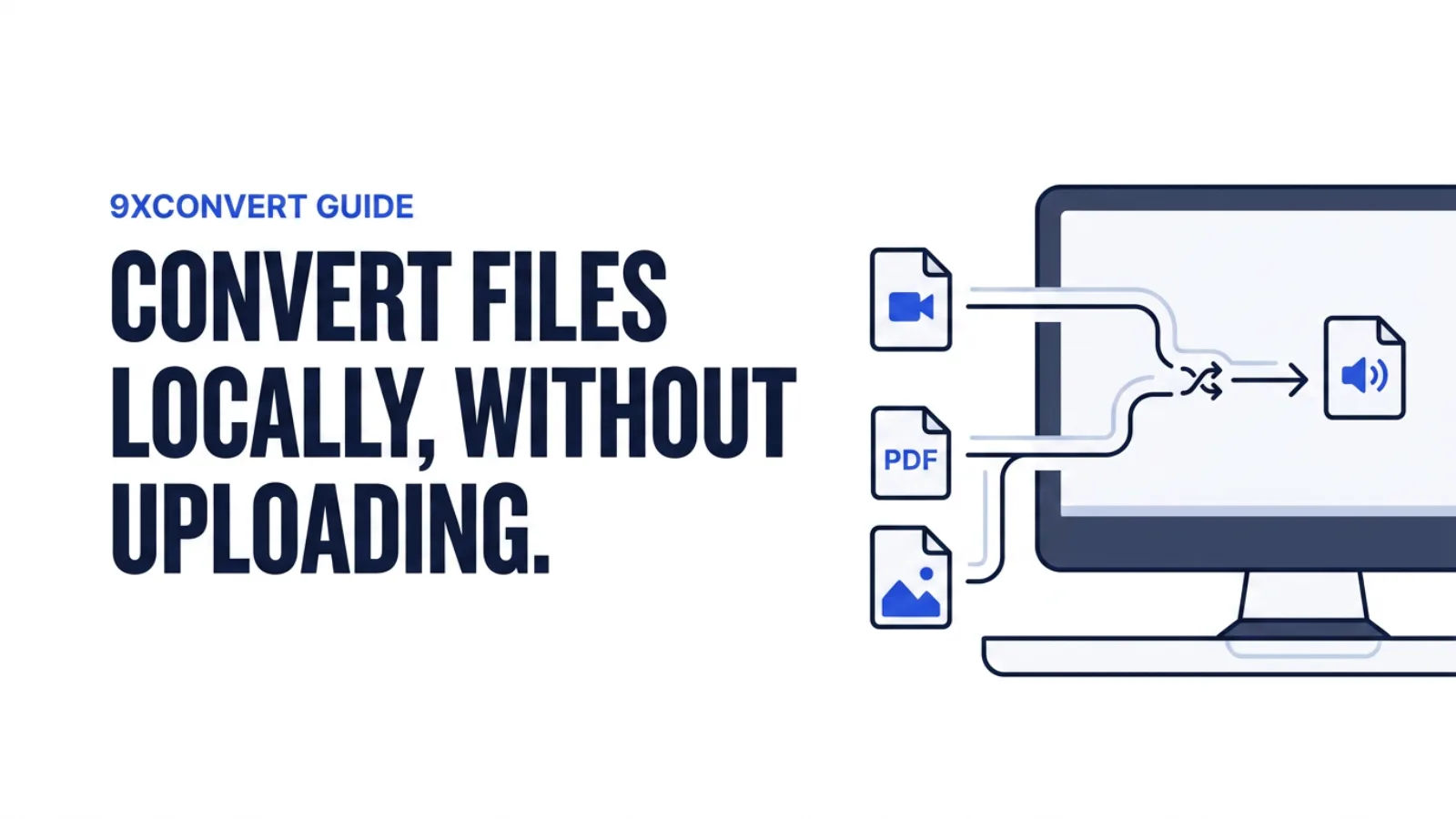
Where the architecture allows it, we remove the question entirely. 9xconvert converts and edits on your own machine instead of uploading files to a server. Nothing is transferred, so there is nothing to retain, nothing to mine, and nothing to lose in someone else's breach. That is a stronger guarantee than any policy, because it does not depend on us keeping one.
We also think privacy needs plain language. You should be able to work out what a product needs, why it needs it and what happens to it without decoding anything, which is what our privacy policy is written for.
The standard
Privacy should not be something people unlock. Not an add-on, not a paid tier, not a maze to be navigated alone. It belongs in the foundation, alongside the rest of the decisions that determine whether software is worth trusting.
Practical tools, less friction, clear language, and respect for the people who rely on them — that is the standard we are trying to hold ourselves to, and it comes from the same reasoning behind everything else we build.
Because privacy is not a premium feature. It is the default.
Read the privacy policy, or see what it looks like in practice: 9xBuddy, a private video downloader and 9xConvert, an offline file converter both run entirely on your device and never send a file anywhere, and 9xChat, a private AI chat app, keeps the workspace local and tells you plainly what a cloud model does receive.
 9xconvert
 9xbuddy